In the shadowy realms of wildlife conservation, a silent war rages—one fought not with bullets alone, but with bytes, drones, and data. The plight of the rhinoceros, hunted to the brink for its horn, has become a symbol of both human greed and human ingenuity. Across Africa and Asia, conservationists are turning to cutting-edge technology in a desperate bid to outsmart poachers and secure a future for these ancient creatures.
The scale of the crisis is staggering. Rhino populations have plummeted over decades, driven by insatiable demand for their horns, which are falsely prized in some traditional medicine markets and as status symbols. Traditional anti-poaching methods—armed patrols, fences, and community outreach—while valiant, have often been outgunned and outmaneuvered by sophisticated, well-funded criminal networks. These syndicates employ night-vision gear, silenced weapons, and even veterinary drugs to silently dart and dehorn animals, leaving them to bleed out. The old ways of protecting rhinos are no longer enough; the battlefield has evolved, and so must the defense.
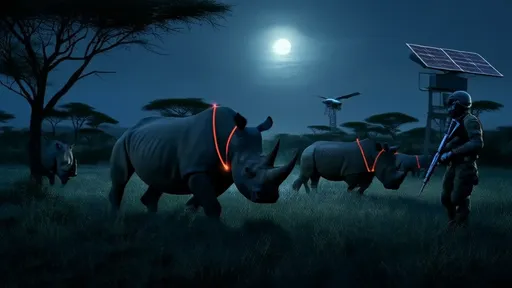
Enter the era of the digital ranger. At the forefront are unmanned aerial vehicles, or drones, equipped with thermal imaging cameras. These silent sentinels patrol vast tracts of land, especially under the cover of darkness when poachers are most active. The heat signatures of humans and vehicles stand out starkly against the cool backdrop of the bush, allowing rangers in a central control room to pinpoint threats in real-time and dispatch rapid-response teams. This aerial surveillance creates a persistent, unblinking eye over the landscape, drastically reducing the element of surprise that poachers once relied upon.
But the tech arsenal extends far beyond the skies. On the ground, a network of seismic and acoustic sensors is being buried or hidden in trees. These devices can detect the faint vibrations of footsteps or the crack of a twig, differentiating between animal movement and potential human intruders. This seismic fingerprinting creates an invisible tripwire, alerting rangers to unauthorized presence before a shot is ever fired. Coupled with this are intelligent camera traps. Gone are the simple motion-activated cameras; the new generation uses artificial intelligence to analyze images on the spot. They can distinguish a curious elephant from a human with a rifle, sending immediate alerts only for critical threats and saving precious bandwidth and response time.
The intelligence gathered doesn't just stop at the reserve boundary. Predictive analytics software, much like that used by police to forecast crime hotspots, is now being applied to poaching. By crunching data—historical poaching incidents, animal movement patterns from GPS collars, weather conditions, even intelligence on black-market horn prices—these systems generate daily maps showing where a poaching event is most likely to occur. This allows rangers to pre-emptively deploy their forces to these high-risk zones, moving from a reactive to a proactive stance. It’s a game of chess, and data is providing the next move.
Perhaps one of the most controversial yet innovative technologies is the use of cyber-poisoning and DNA tracking. To dismantle the demand side, some conservation groups have begun infiltrating the online black markets where rhino horn is traded. They flood these platforms with fake products or products laced with traceable, non-lethal toxins and RFID tags, rendering the horns worthless and risky to sell. Furthermore, every confiscated horn is now genetically sampled and logged into a massive international database. This Rhino DNA Indexing System (RhODIS) allows authorities to trace a seized horn back to the exact individual animal and location it was poached from, providing irrefutable evidence to secure convictions and map the entire supply chain back to the kingpins.
The integration of these systems is where the true magic happens. A single platform now often ties everything together—drone feeds, sensor alerts, GPS tracker locations, and predictive maps—all displayed on a digital dashboard for ranger commanders. This central nervous system for the reserve provides an unprecedented level of situational awareness. A seismic sensor trigger can automatically re-route a nearby drone to investigate, while the location of all patrol vehicles is tracked to direct the closest unit to the threat. This seamless flow of information creates a force multiplier, allowing a limited number of rangers to effectively guard a much larger area.
However, this tech-driven war is not without its challenges and ethical dilemmas. The cost of acquiring and maintaining this technology is enormous, often stretching the budgets of non-profit conservation groups and government parks to their limits. There’s a constant risk of an arms race, where poachers themselves adopt technology like signal jammers to disable drones and trackers. Furthermore, the extensive surveillance raises questions about the privacy of the local communities living near these reserves and the potential for data misuse. Conservationists are acutely aware that technology is a tool, not a silver bullet. It must be deployed ethically and in conjunction with, not in replacement of, the vital work of community engagement, education, and addressing the root causes of poverty that drive some to poaching.
Despite the challenges, the results speak volumes. Reserves that have integrated these technologies report dramatic drops in poaching incidents. The element of uncertainty they create is a powerful deterrent; poachers can no longer assume the cover of darkness or vastness will protect them. They are now hunting in a domain where they are constantly watched, predicted, and outmaneuvered. Each rhino saved, each poaching ring disrupted, is a testament to this new approach.
The fight for the rhinoceros is a microcosm of the larger battle for biodiversity in the Anthropocene. It is a stark reminder of the damage our species can inflict, but also a powerful demonstration of our capacity for innovation and protection. This high-tech武装ed war is more than just saving an iconic animal; it’s about preserving the integrity of ecosystems and proving that humanity can learn to be a steward, not just a consumer, of the natural world. The future of conservation is here, and it is wired, connected, and fiercely determined to win.

By /Aug 21, 2025

By /Aug 21, 2025
By /Aug 21, 2025

By /Aug 21, 2025
By /Aug 21, 2025
By /Aug 21, 2025

By /Aug 21, 2025

By /Aug 21, 2025
By /Aug 21, 2025
By /Aug 21, 2025
By /Aug 21, 2025
By /Aug 21, 2025
By /Aug 21, 2025

By /Aug 21, 2025
By /Aug 21, 2025
By /Aug 21, 2025
By /Aug 21, 2025
By /Aug 21, 2025
By /Aug 21, 2025
By /Aug 21, 2025
