Mantis Shrimp's Deadly Strike: The Super Weapon of Crustaceans

Aug 21, 2025 By

The ocean depths hold countless marvels, but few are as simultaneously beautiful and brutal as the mantis shrimp. To the casual observer, it might appear as just another colorful crustacean, a quirky resident of a coral reef. But this perception shatters the moment it unleashes one of the most explosive and devastating attacks in the animal kingdom—a strike so fast and powerful it has captivated scientists, engineers, and military researchers for decades. This is the story of a creature armed with a superweapon, a living testament to the extreme forces evolution can engineer.

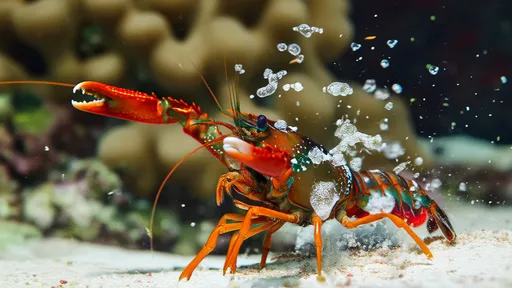
Officially belonging to the order Stomatopoda, mantis shrimp are not true shrimp but a separate lineage of marine crustaceans that diverged from their cousins hundreds of millions of years ago. They are ancient, sophisticated, and formidable predators. They are broadly divided into two categories based on their primary hunting tool: "smashers" and "spearers." The spearers are ambush predators, armed with barbed, spiky appendages they use to impale soft-bodied prey like fish in a lightning-fast jab. But it is the "smashers" that are the true engineers of ultra-violence. Their weapon of choice is a specialized pair of raptorial claws that they use to bludgeon their prey with the force of a bullet.

The mechanics of this strike are a masterpiece of biological engineering. It is not merely a case of strong muscles. The secret lies in a complex latch-and-spring mechanism, a system known as a power-amplified system. The shrimp's muscle slowly contracts, loading energy into a saddle-shaped structure made of a highly elastic biological composite. This structure acts like a spring, coiling with potential energy. A biological latch holds the spring-loaded appendage in place. When the shrimp is ready to strike, it releases the latch. The stored energy is unleashed in an instant, catapulting the club forward at an astonishing acceleration.

The numbers behind this movement are staggering. The club accelerates to over 50 miles per hour in under three thousandths of a second, generating an acceleration of more than 10,000 times the force of gravity. The force of the impact is comparable to a .22 caliber bullet, and it happens underwater, a dense medium that imposes immense resistance on any fast movement. For a brief moment, the cavitation bubbles caused by the extreme speed of the club collapse with such intensity that they emit a flash of light and generate temperatures approaching the surface of the sun, delivering a secondary shockwave and thermal damage to the target. The prey is hit not once, but twice: first by the club itself, and a microsecond later by the force of this collapsing bubble.

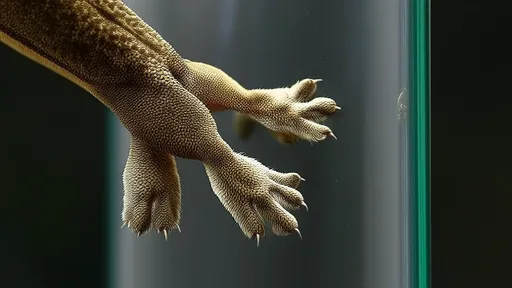
The prey of a smasher mantis shrimp, often hard-shelled crabs, clams, and snails, doesn't stand a chance. The impact is so violent that it can easily shatter thick aquarium glass. The force is focused onto a tiny area on the club's tip, creating immense pressure that pulverizes the strongest shells. Researchers study the structure of this club to understand what makes it so resilient, as it must withstand these incredible forces thousands of times throughout the shrimp's life without fracturing. The club is a multilayered composite material. Its impact region is made of hydroxyapatite, a crystalline calcium phosphate also found in human bones, but arranged in a unique, highly ordered structure that dissipates energy and prevents cracks from spreading. Beneath this hard outer layer lies a region of chiral, spiraling fibers that act as a shock absorber, further containing the damage from each catastrophic blow.

Perhaps just as incredible as the weapon itself is the shrimp's ability to wield it without damaging its own body. The appendage and the rest of the shrimp are protected by the same principles of advanced materials science. Furthermore, the strike is so fast that the water itself doesn't have time to flow around the club, effectively making the water behave like a solid upon impact, which actually helps protect the shrimp's limb. This intricate combination of offensive power and defensive resilience is a hallmark of its evolutionary perfection.

The mantis shrimp's superweapon is not just a biological curiosity; it is a source of profound inspiration across multiple fields of human innovation. In materials science, the structure of the club is being reverse-engineered to create new types of lightweight, ultra-tough composite materials. Researchers are studying the helicoidal (spiral) arrangement of its fibers to develop better body armor for soldiers, more resilient aircraft frames, and improved protective gear for athletes. By mimicking nature's blueprint, engineers hope to create materials that can absorb and dissipate energy far more effectively than current technology allows.

Beyond materials, the entire latch-mediated spring mechanism is a paradigm for designing small-scale, high-power robotics. Creating robots that can generate rapid, powerful movements without large, heavy motors and power sources is a significant challenge. The mantis shrimp offers a elegant solution: store energy slowly and release it suddenly. This bio-inspired approach could lead to advancements in miniature surgical robots, deep-sea exploration probes, and other applications where compact size and explosive power are required.

Even the shrimp's extraordinary vision, which is among the most complex in the animal kingdom with up to 16 types of color-receptive cells (humans have three), plays a role in its attack. This visual system allows it to perceive a spectrum of light and polarization patterns invisible to us, which may aid in targeting and communication. This too is being studied for applications in developing advanced optical sensors and imaging technology.

The existence of the mantis shrimp forces a re-evaluation of what is possible within the constraints of biology. It is a creature that has evolved a weapon system that humanity has only been able to replicate through complex chemistry and engineering—and even then, not on such a small and efficient scale. It is a reminder that the natural world is not always a gentle place; it is an arena of intense competition that has spawned truly extreme adaptations. The mantis shrimp, in its vibrant, alien glory, is more than just a predator. It is a natural-born engineer, a master of physics, and a living lesson in the devastatingly beautiful potential of evolution's relentless innovation.
Recommend Posts
Animal

AI-Powered Computer Vision for Wildlife Conservation

By /Aug 21, 2025

In the dense rainforests of Central Africa, a silent observer tracks the movements of a family of mountain gorillas. It isn't a human researcher braving the elements, but a sophisticated camera trap system, its lenses powered by artificial intelligence. This scene is becoming increasingly common across the globe, as conservationists turn to computer vision—a branch of AI that enables computers to derive meaningful information from digital images and videos—to wage a more effective battle for wildlife preservation. The marriage of cutting-edge technology and ecological science is forging a new frontier in animal protection, one where algorithms can identify individual animals, monitor populations, and even predict poaching threats with astonishing speed and accuracy.
Animal

Bird Nest Building Art: Master Engineers of Architectural Construction in Nature

By /Aug 21, 2025

In the quiet corners of forests, along bustling city ledges, and deep within secluded marshes, a silent architectural revolution has been underway for millennia. Birds, the unheralded masters of natural engineering, engage in a complex and ancient art form: nest building. Far from being simple piles of twigs, these structures are sophisticated feats of biological engineering, tailored with astonishing precision to meet the exacting demands of protection, temperature regulation, and species propagation. Each creation is a testament to millions of years of evolutionary refinement, a perfect marriage of instinct, learned behavior, and available materials.
Animal

The Tender Side of Crocodiles: Parental Care in Reptiles

By /Aug 21, 2025

When we think of crocodilians, the image that typically springs to mind is one of ancient, armored predators lurking in murky waters, embodying a primordial sense of menace. This fearsome reputation, cemented by countless documentaries and films, paints them as cold-blooded killing machines, relics of a bygone era with a singular focus on survival through brute force. However, this long-held caricature is a profound oversimplification, obscuring a complex and surprisingly tender side to their nature. A growing body of scientific research is peeling back the scales to reveal a world of intricate social behaviors, sophisticated communication, and, most astonishingly, a depth of parental care that rivals that of many birds and mammals.
Animal

Giant Panda Conservation Achievements: From Endangered to Vulnerable on the Path of Conservation

By /Aug 21, 2025

In the misty mountains of central China, a conservation miracle has been quietly unfolding over the past half-century. The giant panda, once teetering on the brink of extinction, has become one of the world's most celebrated conservation success stories. This remarkable journey from endangered to vulnerable status represents not just the salvation of a single species, but a testament to what dedicated human effort can achieve when science, political will, and public passion converge.
Animal

Mantis Shrimp's Deadly Strike: The Super Weapon of Crustaceans

By /Aug 21, 2025

The ocean depths hold countless marvels, but few are as simultaneously beautiful and brutal as the mantis shrimp. To the casual observer, it might appear as just another colorful crustacean, a quirky resident of a coral reef. But this perception shatters the moment it unleashes one of the most explosive and devastating attacks in the animal kingdom—a strike so fast and powerful it has captivated scientists, engineers, and military researchers for decades. This is the story of a creature armed with a superweapon, a living testament to the extreme forces evolution can engineer.
Animal

Gecko's Adhesive Ability: Superb Attachment Force Brought by Microstructures

By /Aug 21, 2025

In the quiet corners of our homes and the dense canopies of tropical forests, an extraordinary feat of biological engineering unfolds with every step a gecko takes. These unassuming lizards scale vertical surfaces and traverse ceilings with an ease that defies gravity, a ability that has captivated scientists and engineers for centuries. The secret to this gravity-defying locomotion lies not in sticky secretions or suction cups, but in one of nature's most sophisticated microscopic architectural marvels.
Animal

The Art of Albatross Gliding: Energy-Efficient Flight Masters Above the Ocean

By /Aug 21, 2025

The albatross, a creature of mythic endurance and grace, has long captured the human imagination not merely as a seabird, but as the undisputed master of the ocean's airways. Its existence is a testament to evolutionary perfection in flight, a symphony of biological engineering that allows it to traverse thousands of miles over the featureless blue desert of the sea with an economy of effort that borders on the miraculous. To observe an albatross in its element is to witness a ballet with the wind, a performance honed over millions of years.
Animal

Marine Protected Area Construction: The Rebirth Hope of Coral Reef Ecosystems

By /Aug 21, 2025

Amid the escalating crisis of global coral reef degradation, marine protected areas emerge as a beacon of resilience and recovery. The establishment of these sanctuaries represents not merely a conservation effort but a profound commitment to restoring the intricate balance of marine ecosystems. Coral reefs, often dubbed the rainforests of the sea, are facing unprecedented threats from climate change, overfishing, and pollution. However, within the boundaries of well-managed marine reserves, there is a palpable sense of hope—a testament to nature's remarkable ability to heal when given a chance.
Animal

Biomimicry Applications: Technological Innovations Inspired by Animals

By /Aug 21, 2025

In the quiet hum of a modern research lab, a team of engineers stares at a screen displaying the slow, graceful flap of a hummingbird's wings. This is not a nature documentary, but the birthplace of the next generation of micro-drones. Across the globe, another group studies the powerful, streamlined form of a kingfisher, not for ornithology, but to solve a sonic boom. This is biomimicry in action: the conscious emulation of nature's genius to solve human challenges. It is a field where the ancient wisdom of the natural world collides with cutting-edge technology, yielding solutions that are as elegant as they are effective. We are not just observing nature; we are becoming its most attentive students, learning to innovate from 3.8 billion years of research and development.
Animal

The Electrophysiological Mechanism of Electric Eels: The Principle of Bioelectricity Generation

By /Aug 21, 2025

In the shadowy depths of South American rivers, a creature exists that seems to defy the very laws of nature as we understand them. The electric eel, or Electrophorus electricus, is not a true eel but a knife fish, a living paradox of serene grace and shocking power. For centuries, it has captivated scientists and laypeople alike, not for its appearance, but for its breathtaking ability to generate electricity. This is not a simple parlor trick of the animal kingdom; it is one of the most sophisticated and powerful biological power generation systems on Earth. The story of how this animal produces its charge is a profound narrative of evolutionary ingenuity, a tale written in the language of ions and membranes, of specialized cells and neural commands.
Animal

The Cheetah's Acceleration Miracle: The Fastest Accelerating Machine on Land

By /Aug 21, 2025

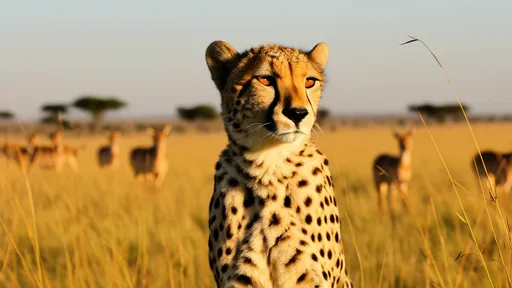
The African savannah holds many marvels, but few are as breathtaking as the raw, explosive acceleration of a hunting cheetah. In the span of a few heartbeats, this magnificent cat transforms from a statuesque observer into a blur of focused velocity, a testament to millions of years of evolutionary perfection. It is not merely fast; it is the fastest accelerator on land, a living projectile whose launch sequence is a biomechanical wonder.
Animal

Bioacoustics Research: Decoding the Communication of Animal Sounds

By /Aug 21, 2025

In the dense rainforests of Central Africa, a low-frequency rumble travels through the undergrowth, a sound almost imperceptible to human ears but carrying critical information for forest elephants miles away. Meanwhile, in the depths of the Pacific Ocean, humpback whales compose complex songs that evolve throughout their migration seasons, creating cultural traditions passed across generations. These are not mere animal noises but sophisticated communication systems that scientists are only beginning to decipher through the emerging field of bioacoustics.
Animal

Migratory Bird Conservation Network: Transnational Action for Feathered Guardians

By /Aug 21, 2025

In the quiet hours before dawn, a soft rustle stirs the reeds along the wetlands of Siberia. A flock of bar-tailed godwits, having feasted through the brief Arctic summer, lifts into the sky. Their journey, one of the most extraordinary in the natural world, will take them non-stop across the vast expanse of the Pacific Ocean to the shores of New Zealand. They are not alone. Across the globe, billions of birds embark on similar epic voyages, tracing ancient pathways in the sky that weave across continents and oceans. These are the migrants, and their survival hinges on a fragile, interconnected chain of habitats that knows no political borders. Their enduring journey has, in turn, inspired one of humanity's most remarkable conservation endeavors: the transnational network for migratory bird protection, a silent pact among nations to guard these feathered travelers.
Animal

Coexistence of Urban Wildlife: The Path to Ecological Balance in Modern Cities

By /Aug 21, 2025

In the heart of our bustling metropolises, a quiet revolution is unfolding. As concrete jungles expand and human populations soar, an unexpected narrative of coexistence is being written between urban dwellers and their wild counterparts. The concept of city wildlife is no longer an anomaly but a critical component of modern ecological discourse, challenging our perceptions of where nature belongs and how we might forge a sustainable future amidst steel and glass.
Animal

Rhino Poaching Prevention: The High-Tech Battle for Animal Conservation

By /Aug 21, 2025

In the shadowy realms of wildlife conservation, a silent war rages—one fought not with bullets alone, but with bytes, drones, and data. The plight of the rhinoceros, hunted to the brink for its horn, has become a symbol of both human greed and human ingenuity. Across Africa and Asia, conservationists are turning to cutting-edge technology in a desperate bid to outsmart poachers and secure a future for these ancient creatures.
Animal

Feline Hunting Education: Observations on Wild Animal Parent-Child Education

By /Aug 21, 2025

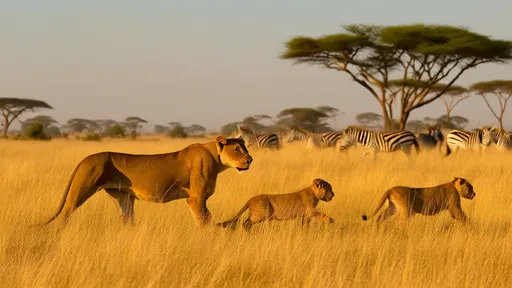
In the dense undergrowth of a temperate forest, a faint rustle betrays movement where all seems still. A mother bobcat pauses, one paw suspended mid-step, her gaze locked on the disturbance. Behind her, two clumsy kittens mirror her posture with comical imprecision, their oversized paws sinking into the soft earth. This silent tableau is not merely a hunt; it is a classroom. Across the wild felid world, from the sprawling savannas where lion prides reign to the solitary stealth of snow leopards on high cliffs, the transmission of hunting prowess from one generation to the next is a nuanced and critical education. It is a curriculum written in instinct, refined by observation, and tested in the unforgiving examination of survival.
Animal

Animal Tracking Technology: New Behavioral Discoveries Brought by Satellite Tags

By /Aug 21, 2025

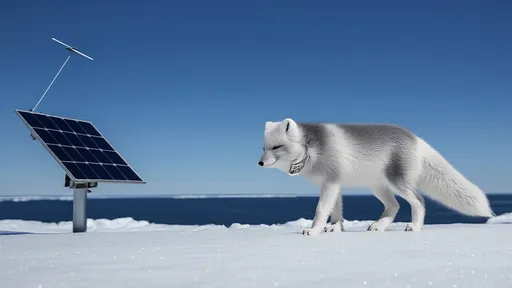
In the vast expanse of the Serengeti, a lone elephant moves with a deliberate grace, its path etched into the dry earth. For decades, such journeys were mysteries, their purpose and patterns hidden in the dust. Today, that same elephant carries a silent passenger—a small, solar-powered satellite tag affixed to its ear. This unassuming device is more than a beacon; it is a key, unlocking a vault of behavioral secrets that have eluded scientists for centuries. The era of animal tracking has evolved from rudimentary radio collars to sophisticated satellite technology, and with it, our understanding of the natural world is undergoing a profound and exhilarating transformation.
Animal

Kangaroo's Pouch: The Mobile Nursery for Marsupials

By /Aug 21, 2025

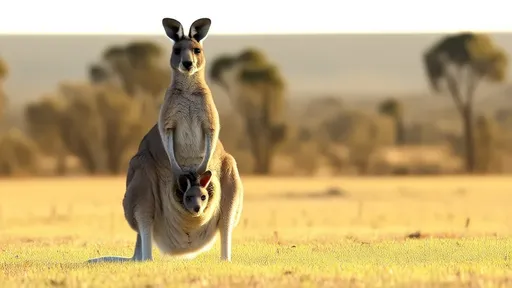
In the vast and varied tapestry of the animal kingdom, few anatomical features are as iconic or as functionally remarkable as the marsupial pouch. This extraordinary structure, a hallmark of kangaroos, koalas, wallabies, and their relatives, is far more than a simple pocket; it is a highly sophisticated, mobile nursery that has been perfected over millions of years of evolution. It represents a radical and successful alternative to the placental reproductive strategy employed by most other mammals, offering a fascinating glimpse into nature's ingenuity.
Animal

Wildlife Photography: The Truth of Nature Captured by Technology

By /Aug 21, 2025

In the hushed pre-dawn light of a misty forest, a motion-sensitive camera silently captures the intimate grooming ritual of a snow leopard—an animal so elusive it was once called the "ghost of the mountains." This moment, frozen in time and pixels, is more than a stunning image; it is a data point, a behavioral insight, and a testament to how technology is fundamentally rewriting humanity’s relationship with the wild. Wildlife photography has transcended its artistic and documentary origins to become a powerful, indispensable tool in the crusade for conservation, offering a raw, unvarnished, and deeply revealing look into the natural world.
Animal

Penguin Daycare: Collective Childcare System in Antarctic Kindergartens

By /Aug 21, 2025

In the vast, frozen expanse of Antarctica, where survival is a daily battle against the elements, a remarkable social structure thrives among the emperor penguins. This is the story of their crèches, the Antarctic kindergartens that represent one of the most sophisticated and vital collective childcare systems in the animal kingdom. Far from a simple gathering of chicks, these nurseries are a complex, instinct-driven strategy for species survival, a testament to evolutionary ingenuity in the planet's harshest environment.