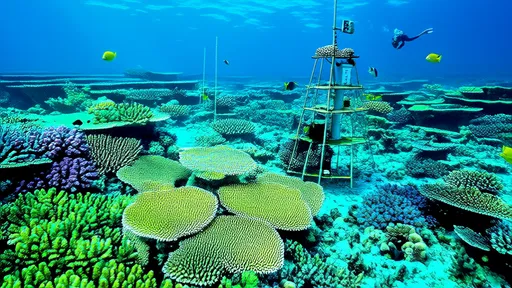
Amid the escalating crisis of global coral reef degradation, marine protected areas emerge as a beacon of resilience and recovery. The establishment of these sanctuaries represents not merely a conservation effort but a profound commitment to restoring the intricate balance of marine ecosystems. Coral reefs, often dubbed the rainforests of the sea, are facing unprecedented threats from climate change, overfishing, and pollution. However, within the boundaries of well-managed marine reserves, there is a palpable sense of hope—a testament to nature's remarkable ability to heal when given a chance.
The concept of marine protected areas is not new, but its implementation has gained significant momentum in recent decades. These designated zones restrict human activities, particularly fishing and coastal development, to mitigate anthropogenic pressures. The primary objective is to create a refuge where marine life can thrive undisturbed, thereby fostering ecological stability. For coral reefs, which are exceptionally vulnerable to environmental stressors, such sanctuaries offer a critical lifeline. Scientists have observed that protected reefs exhibit greater biodiversity, higher fish biomass, and enhanced coral cover compared to their unprotected counterparts.
One of the most compelling success stories unfolds in the Great Barrier Reef Marine Park in Australia. As one of the largest and most rigorously managed marine protected areas in the world, it showcases the transformative power of conservation. Despite enduring severe bleaching events, sections within the park have demonstrated remarkable recovery. The reduction in fishing pressure has allowed herbivorous fish populations to flourish, which in turn helps control algal growth that can smother corals. This ecological interplay underscores the importance of holistic management strategies that address multiple facets of ecosystem health.
Similarly, the Phoenix Islands Protected Area in Kiribati stands as a testament to international collaboration and visionary leadership. This vast expanse of ocean, spanning over 400,000 square kilometers, is a haven for pristine coral reefs. By prohibiting commercial fishing and minimizing other human impacts, the reserve has become a stronghold for biodiversity. Researchers have documented thriving coral communities teeming with life, including species that are rare or endangered elsewhere. The resilience observed here offers invaluable insights into how reefs might withstand future climatic challenges.
However, the journey toward effective marine protection is fraught with challenges. Enforcement remains a critical issue, particularly in remote or economically disadvantaged regions. Poaching, illegal fishing, and inadequate funding can undermine even the most well-intentioned initiatives. Moreover, the design of marine protected areas must be scientifically informed to ensure they encompass key habitats and ecological corridors. Connectivity between reefs is essential for the dispersal of larvae and the genetic exchange that underpins population resilience. Therefore, a network of protected areas, rather than isolated pockets, is crucial for long-term success.
Climate change looms as an ever-present threat that transcends the boundaries of any sanctuary. Rising sea temperatures, ocean acidification, and increasingly frequent storms pose existential risks to coral reefs worldwide. While marine protected areas cannot single-handedly combat global warming, they can enhance the adaptive capacity of reefs. Healthier ecosystems are better equipped to recover from disturbances, such as bleaching events. Furthermore, protected reefs may serve as genetic reservoirs, preserving species and traits that could be vital for future restoration efforts.
Community involvement is another cornerstone of successful marine conservation. Local communities, often the stewards of these coastal resources, must be engaged as active participants rather than passive beneficiaries. In places like the Philippines and Indonesia, community-based management has yielded impressive results. By empowering fishermen and coastal residents to oversee protected areas, these initiatives foster a sense of ownership and responsibility. Traditional knowledge, combined with scientific expertise, can lead to more sustainable and culturally appropriate conservation practices.
Technological advancements are also revolutionizing the way we monitor and manage marine protected areas. Satellite surveillance, drones, and artificial intelligence are being deployed to detect illegal activities and assess ecosystem health in real-time. These tools enable more efficient enforcement and data-driven decision-making. For instance, acoustic monitoring can track fish populations and coral recovery without invasive methods, providing a clearer picture of conservation outcomes.
The economic argument for marine protected areas is equally persuasive. Healthy reefs support lucrative industries such as tourism and fisheries. Coral reefs attract millions of divers and snorkelers annually, generating billions of dollars in revenue. By safeguarding these ecosystems, protected areas ensure the continued provision of these economic benefits. Additionally, they offer insurance against the collapse of fisheries by acting as nurseries that replenish adjacent fishing grounds. This spillover effect demonstrates that conservation and sustainable use are not mutually exclusive but rather complementary goals.
Looking ahead, the expansion and enhancement of marine protected areas must be a global priority. International agreements, such as the United Nations' goal to protect 30% of the world's oceans by 2030, provide a framework for ambitious action. However, quantity must not come at the expense of quality. Effective management, adequate funding, and robust legal frameworks are essential to translate designated areas into genuine sanctuaries. Collaboration between governments, NGOs, scientists, and local communities will be key to achieving these objectives.
In conclusion, marine protected areas represent a cornerstone of hope for coral reef ecosystems. While they are not a panacea for all the challenges facing these fragile habitats, they offer a proven pathway to recovery and resilience. The rebirth of coral reefs within these sanctuaries is a powerful reminder of what can be achieved through dedicated conservation efforts. As we navigate an uncertain environmental future, these protected havens will play an increasingly vital role in preserving the biodiversity and beauty of our oceans for generations to come.

By /Aug 21, 2025

By /Aug 21, 2025

By /Aug 21, 2025

By /Aug 21, 2025
By /Aug 21, 2025

By /Aug 21, 2025

By /Aug 21, 2025
By /Aug 21, 2025

By /Aug 21, 2025
By /Aug 21, 2025

By /Aug 21, 2025

By /Aug 21, 2025

By /Aug 21, 2025

By /Aug 21, 2025

By /Aug 21, 2025

By /Aug 21, 2025

By /Aug 21, 2025

By /Aug 21, 2025

By /Aug 21, 2025

By /Aug 21, 2025
