In the dense rainforests of Central Africa, a low-frequency rumble travels through the undergrowth, a sound almost imperceptible to human ears but carrying critical information for forest elephants miles away. Meanwhile, in the depths of the Pacific Ocean, humpback whales compose complex songs that evolve throughout their migration seasons, creating cultural traditions passed across generations. These are not mere animal noises but sophisticated communication systems that scientists are only beginning to decipher through the emerging field of bioacoustics.
The study of animal vocalizations is undergoing a revolution comparable to the cracking of ancient scripts like Linear B or Egyptian hieroglyphs. For centuries, humans interpreted animal sounds through an anthropomorphic lens, assigning simple emotional states to what we now understand are intricate linguistic structures. The dawn of bioacoustics research began with basic sound recording and spectrogram analysis, but recent technological advancements have catapulted the field into entirely new dimensions of understanding.
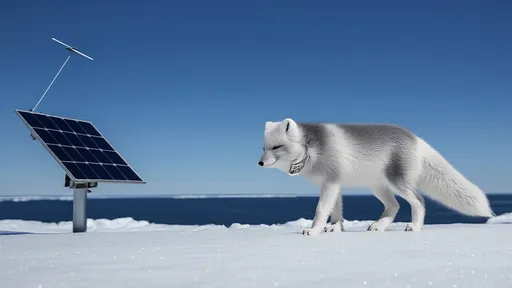
Advanced recording technologies now allow researchers to capture sounds across frequencies inaudible to humans – from the infrasonic communication of elephants to the ultrasonic echolocation of bats. Distributed acoustic sensor networks can monitor entire ecosystems continuously, creating vast datasets that would have taken decades to compile just years ago. These technological leaps have revealed that what we once considered simple animal calls are actually complex syntactic structures with distinct grammar rules.
Perhaps the most startling revelation concerns the contextual flexibility of animal communication. Prairie dogs, for instance, don't merely have a generic "predator alert" call but create specific vocalizations that describe the type of predator (hawk, coyote, human), its size, color, and even whether it's carrying weapons. Their communication system contains what linguists call displacement – the ability to refer to things not immediately present – a feature once believed unique to human language.
The sophistication extends to marine environments where cetacean communication demonstrates remarkable complexity. Sperm whales use patterned clicks called codas that appear to convey identity information, essentially functioning as names within their social groups. Different whale clans develop distinct vocal traditions, creating cultural boundaries between groups that share the same waters but maintain separate communicative identities.
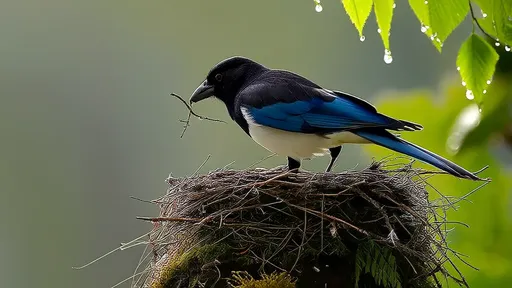
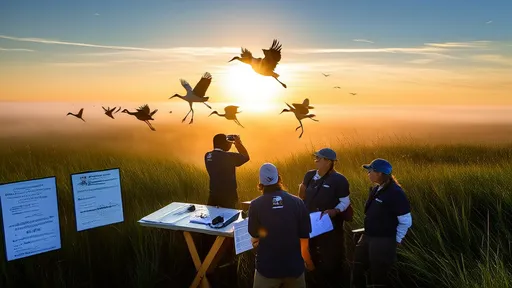
Bird species have revealed equally complex vocal systems. The humble chickadee varies its "chick-a-dee" call depending on the threat level of predators, adding more "dee" notes for smaller, more agile predators that pose greater danger. Japanese tits have specific alarm calls that mean "snake," prompting other tits to perform anti-snake behaviors like mobbing, while their "hawk" alarm calls trigger completely different escape responses.
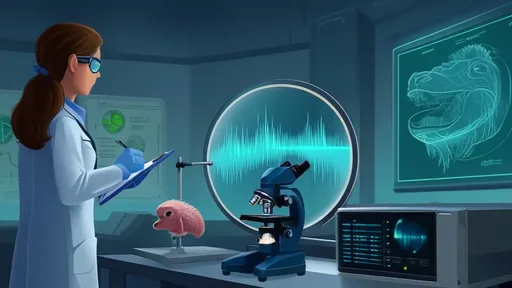
What makes contemporary bioacoustics research particularly exciting is the application of machine learning algorithms to decode these communication systems. Researchers are using pattern recognition systems similar to those employed in human language translation to identify syntax and meaning in animal vocalizations. These AI systems can detect subtle variations imperceptible to human analysts, revealing layers of complexity that were previously invisible.
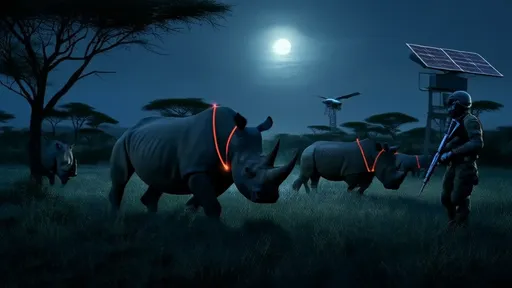
The implications extend beyond pure scientific curiosity. Understanding animal communication systems could revolutionize conservation efforts. Acoustic monitoring can track animal populations more accurately than visual surveys, especially in dense habitats. More profoundly, comprehending how animals communicate about environmental changes might provide early warning systems for ecosystem health, as many species develop specific vocalizations related to food scarcity, pollution, or habitat degradation.
Some researchers are even exploring the possibility of two-way communication with other species. Projects attempting to decode dolphin whistles and create responsive synthetic whistles represent the frontier of interspecies communication. While still in early stages, these efforts raise profound questions about our relationship with other intelligent beings and our ethical responsibilities toward creatures whose inner worlds we are beginning to glimpse.
As bioacoustics advances, it challenges fundamental assumptions about human uniqueness in the natural world. The discovery that many animals possess communication systems with features once considered exclusively human – syntax, semantics, cultural transmission, and even regional dialects – forces a reexamination of our place in the web of life. We are not the only species with complex social networks, cultural traditions, and sophisticated information exchange.
The soundscape of nature is far richer and more meaningful than previously imagined. Each forest, ocean, and grassland resonates with intricate conversations we are only beginning to understand. As recording technologies improve and analytical methods become more sophisticated, we stand at the threshold of truly hearing the world as it has always been – a vibrant network of interspecies communication that has evolved over millions of years, waiting for us to finally learn how to listen.
By /Aug 21, 2025
By /Aug 21, 2025
By /Aug 21, 2025

By /Aug 21, 2025
By /Aug 21, 2025
By /Aug 21, 2025

By /Aug 21, 2025

By /Aug 21, 2025

By /Aug 21, 2025
By /Aug 21, 2025
By /Aug 21, 2025
By /Aug 21, 2025
By /Aug 21, 2025

By /Aug 21, 2025
By /Aug 21, 2025
By /Aug 21, 2025
By /Aug 21, 2025
By /Aug 21, 2025
By /Aug 21, 2025
By /Aug 21, 2025
