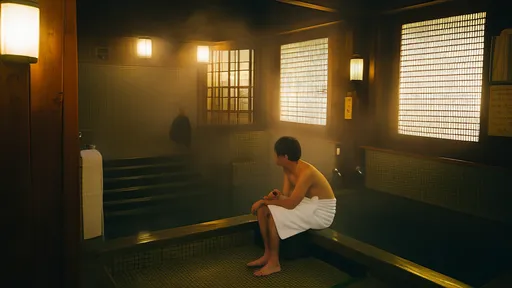
Stepping into a Japanese sentō, or public bathhouse, is like entering a sanctuary where time slows down. These communal bathing spaces, deeply rooted in Japan’s cultural fabric, offer more than just a place to wash—they are a window into the country’s social rituals and historical traditions. Unlike the more luxurious onsen (hot springs), sentō are urban oases, often tucked into narrow streets, serving neighborhoods for generations. The moment you slide open the wooden door, the humid air, the sound of water, and the faint scent of soap envelop you, signaling a departure from the outside world.
The origins of sentō date back to the Nara period (710–794), when Buddhism introduced communal bathing to Japan as a purification practice. By the Edo period (1603–1868), public bathhouses had become social hubs, frequented by merchants, artists, and townsfolk alike. Woodblock prints from the era often depict lively scenes of bathers chatting, eating, and even enjoying street performances within bathhouse premises. Though modernization has reduced their numbers, sentō endure as cherished institutions, particularly in older neighborhoods like Tokyo’s shitamachi (downtown) areas.
Architecturally, sentō are instantly recognizable. Many feature a noren (curtain) adorned with the kanji for yu (hot water) and a distinctive facade resembling a shrine or temple. Inside, gender-segregated bathing areas lead to a large communal tub, often flanked by vibrant murals of Mount Fuji—a nod to the iconic mountain’s spiritual significance. The tiles, though worn, gleam under soft lighting, and the water, usually heated to around 42°C (108°F), is meticulously maintained. Regulars know the unspoken rules: washing thoroughly at the shower stations before entering the tub, keeping towels out of the water, and avoiding loud conversations.
What truly sets sentō apart is their role as egalitarian spaces. Here, salarymen, students, and retirees share the same waters, their societal roles momentarily dissolved. In a culture that often emphasizes privacy and formality, the bathhouse fosters a rare intimacy. Strangers might exchange tips on the best local ramen shops or lament the summer heat while soaking side by side. For older Japanese, especially, sentō evoke nostalgia—a reminder of post-war days when many homes lacked baths, and the neighborhood sentō was a daily necessity.
Yet, the future of sentō is uncertain. From over 2,600 in Tokyo during the 1960s, only about 500 remain today. Rising land prices, aging owners, and younger generations preferring private showers threaten their survival. Some bathhouses have reinvented themselves, offering craft beer or live music to attract patrons, while others preserve traditions like jukusen (deeply concentrated baths) using medicinal herbs. Organizations like the Tokyo Sentō Association actively promote their cultural value, even hosting guided tours for foreigners.
For visitors, experiencing a sentō requires respecting local etiquette. Bathing is a silent, almost meditative act—vigorous scrubbing is done before entering the tub, and staring is taboo. Many sentō now provide English instructions, but observing regulars is the best guide. After soaking, patrons relax in the yukata-clad lounge with a cold milk or ramune, a ritual as vital as the bath itself. In these moments, the sentō reveals its true purpose: not just cleanliness, but communion.
In an era of rapid urbanization and digital isolation, the humble sentō stands as a testament to Japan’s ability to balance tradition and modernity. More than a relic, it’s a living practice—a reminder that some of life’s deepest connections happen when we pause, shed our layers, and share the same water.
By /Aug 13, 2025

By /Aug 13, 2025
By /Aug 13, 2025
By /Aug 13, 2025
By /Aug 13, 2025

By /Aug 13, 2025

By /Aug 13, 2025
By /Aug 13, 2025
By /Aug 13, 2025

By /Aug 13, 2025

By /Aug 13, 2025
By /Aug 13, 2025

By /Aug 13, 2025
By /Aug 13, 2025

By /Aug 13, 2025
By /Aug 13, 2025

By /Aug 13, 2025

By /Aug 13, 2025

By /Aug 13, 2025

By /Aug 13, 2025
