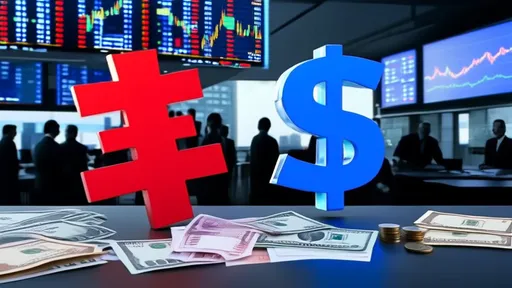
The global financial markets have been experiencing heightened volatility in recent months, with currency exchange rates fluctuating at levels that have left both investors and policymakers on edge. The sudden swings in major currency pairs, particularly those involving the US dollar, euro, and Japanese yen, have raised concerns about potential economic instability. Analysts are closely monitoring these developments, as abrupt currency movements can have far-reaching consequences for trade balances, inflation, and even geopolitical stability.
Central banks around the world are walking a tightrope as they attempt to balance inflation control with economic growth. The Federal Reserve's aggressive interest rate hikes have strengthened the US dollar, creating ripple effects across emerging markets. Countries with high levels of dollar-denominated debt are particularly vulnerable, as their repayment burdens increase with every uptick in the greenback. This has led to what some economists are calling a "silent currency crisis" in developing nations, where reserves are being depleted at alarming rates to defend local currencies.
The eurozone faces its own unique challenges, with the European Central Bank struggling to maintain cohesion among member states. The widening gap between Germany's robust economy and southern Europe's more fragile financial situations has created tension in monetary policy decisions. Meanwhile, the British pound continues to navigate the turbulent waters of post-Brexit economic reality, with markets remaining skeptical about the UK's long-term growth prospects.
Currency wars may be making a quiet comeback as nations increasingly resort to competitive devaluations to protect export markets. China's yuan management has come under particular scrutiny, with accusations of deliberate weakening to maintain trade competitiveness. This has created friction with trading partners, particularly the United States, where some policymakers view currency manipulation as an unfair trade practice. The delicate dance between maintaining export competitiveness and avoiding protectionist retaliation has become increasingly difficult to manage.
Commodity-linked currencies tell their own story of global economic stress. The Australian and Canadian dollars, traditionally seen as barometers for global commodity demand, have shown unusual weakness despite relatively stable resource prices. This suggests deeper concerns about slowing global growth, particularly in China, which serves as the primary customer for many raw material exports. The Russian ruble's wild swings following geopolitical developments demonstrate how quickly currencies can become collateral damage in international conflicts.
Corporate treasurers are facing unprecedented challenges in this environment. Multinational companies that once relied on relatively stable currency relationships now find themselves allocating significant resources to hedge against exchange rate risks. The cost of these hedging operations is cutting into profit margins, forcing difficult decisions about pricing, sourcing, and market strategies. Some firms are reconsidering their global supply chains entirely, opting for regionalization to reduce currency exposure.
The rise of cryptocurrency markets adds another layer of complexity to traditional currency analysis. While still representing a small portion of global financial flows, digital assets have begun to influence mainstream currency markets in unexpected ways. Some emerging market citizens are turning to stablecoins as a hedge against local currency depreciation, creating parallel financial systems that operate outside central bank control. This phenomenon has regulators scrambling to understand and potentially incorporate these new dynamics into their economic models.
Tourism-dependent economies are experiencing particularly acute currency stress. Nations that rely heavily on visitor spending are seeing dramatic shifts in their competitive positions as exchange rates fluctuate. Destinations that were once bargains for international travelers have become prohibitively expensive, while others have suddenly become much more attractive. This volatility makes long-term planning difficult for hospitality businesses and threatens the stability of entire national economies built around tourism.
Forward-looking indicators suggest the currency turbulence may not subside soon. The divergence in monetary policies between major economic blocs, combined with persistent geopolitical tensions and the uneven global recovery from pandemic disruptions, creates fertile ground for continued exchange rate volatility. Investors would be wise to pay close attention to currency risk in their portfolios, as what might appear as minor fluctuations can sometimes signal larger economic shifts on the horizon.
The coming months will likely test the resilience of global currency markets as central banks continue their fight against inflation while trying to avoid triggering financial crises. The delicate balance between domestic price stability and international currency stability has never been more challenging to maintain. Market participants should prepare for a prolonged period of uncertainty, where traditional correlations between currencies and other asset classes may break down unexpectedly.
In this environment, information and speed become critical advantages. Those who can accurately interpret currency warning signs and adapt quickly to changing conditions will be best positioned to navigate the challenges ahead. The current situation serves as a reminder that in our interconnected global economy, exchange rates remain one of the most sensitive and telling indicators of underlying economic health - or distress.

By /Aug 13, 2025

By /Aug 13, 2025

By /Aug 13, 2025

By /Aug 13, 2025

By /Aug 13, 2025

By /Aug 13, 2025
By /Aug 13, 2025

By /Aug 13, 2025

By /Aug 13, 2025

By /Aug 13, 2025

By /Aug 13, 2025

By /Aug 13, 2025

By /Aug 13, 2025

By /Aug 13, 2025

By /Aug 13, 2025

By /Aug 13, 2025

By /Aug 13, 2025

By /Aug 13, 2025

By /Aug 13, 2025

By /Aug 13, 2025
